
Leave Your Message
-
Contact Phone
-
 Contact Email
You know, Nitrile Medical Gloves have really become a staple in healthcare around the world these days. If you look at the latest reports from Research and Markets, the global market for these gloves is actually expected to surpass $11 billion by 2027. Crazy, right? A big part of this boom is because people are now more aware of infection control and safety during medical procedures. Healthcare workers need dependable gloves to minimize the chance of contamination — it’s that simple.
Now, compared to the old-school latex gloves, nitrile gloves come with some clear perks. They’re tougher, more resistant to punctures and chemicals, which means a safer option overall. That said, some folks still get allergic reactions, which kind of raises questions about how these gloves are made and how we can keep safety and comfort balanced. It's definitely something to keep in mind when choosing the right gloves for different tasks.
And I think the COVID-19 situation really highlighted just how crucial nitrile gloves are. When demand shot up unexpectedly, supply chain issues and price swings became a real headache for companies. Brands like Ansell and Cardinal Health scrambled to keep up, all while trying to ensure the quality didn't take a hit. Looking back, it’s clear that all these shifts teach us something important — industry players need to find ways to improve their offerings and guarantee a steady supply for healthcare folks who really rely on these gloves.

Nitrile medical gloves are a vital component in healthcare settings. They are made from synthetic rubber, offering a strong barrier against pathogens. The composition of nitrile provides superior puncture resistance compared to latex. This makes them a preferred choice when dealing with sharp instruments or hazardous materials.
These gloves are not just robust; they are also flexible. This flexibility allows for a better grip and enhanced dexterity. Healthcare professionals appreciate how nitrile gloves conform to the hand’s shape. However, the production process can sometimes lead to variability in quality. Not all nitrile gloves are created equal.
While nitrile gloves are essential, it’s crucial to recognize the role of Non Medical Gloves in various settings. They provide basic hand protection and are suitable for light tasks. However, they lack the same protective qualities against biological hazards. Understanding the differences helps in making informed decisions. Choosing the right type can sometimes be a challenge, especially with many options available.
Nitrile gloves have transformed the medical landscape since their introduction. Initially developed in the late 1980s, they were designed to address latex allergies. Healthcare professionals sought alternatives that offered both protection and comfort. Over time, Nitrile Medical Blue Gloves emerged as a leading option, gaining recognition for their durability and resistance to punctures. These gloves soon became essential in hospitals and clinics worldwide.
The evolution of nitrile gloves reflects advancements in materials science. Early versions were thinner and less flexible. Technological improvements yielded gloves that fit better and offered superior tactile sensitivity. This change was crucial for surgeons and medical staff who depend on precise movements. However, not all nitrile gloves achieve the same quality. Some may lack the necessary strength or stretch. This inconsistency can lead to concerns about safety and effectiveness.
Standards for medical gloves have also evolved. Regulatory bodies emphasize quality control and testing. This assurance is vital for minimizing risks during medical procedures. Nevertheless, the journey toward quality has been a learning process. While many nitrile gloves excel, others do not meet these rigorous standards. The medical community continues to advocate for improvements, ensuring that Nitrile Medical Blue Gloves remain reliable and trustworthy.
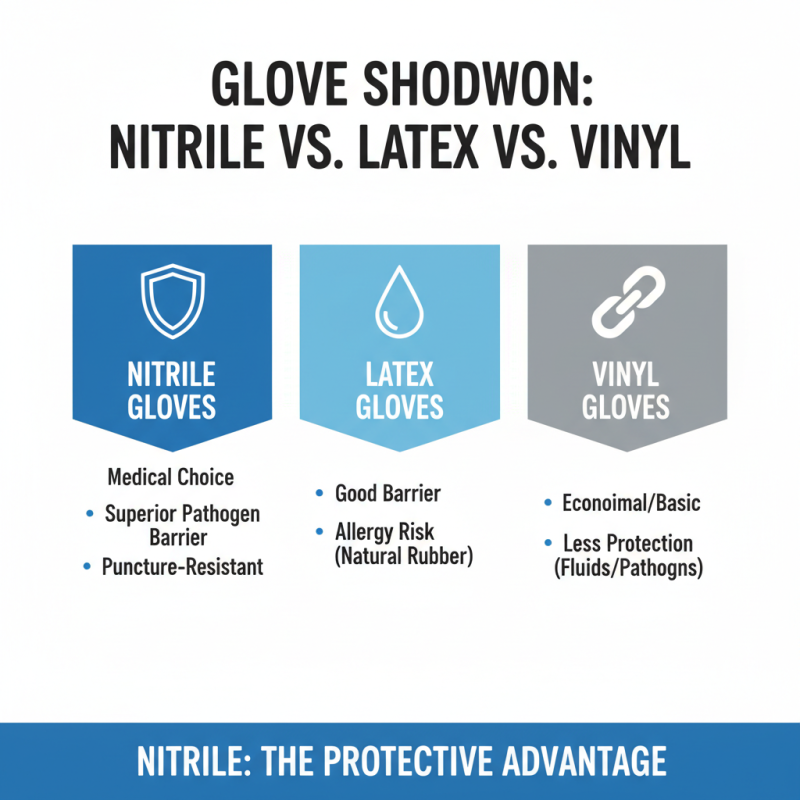
Nitrile gloves are a popular choice in medical settings. They offer excellent protection against pathogens. In a comparison with latex and vinyl gloves, nitrile stands out for several reasons.
Latex gloves, while comfortable, can cause allergic reactions in some users. According to the American Academy of Allergy, Asthma, and Immunology, approximately 1% to 6% of healthcare workers are affected by latex allergies. This clear risk makes nitrile gloves a safer alternative. Nitrile is made from synthetic rubber, reducing the chance of allergic responses.
Vinyl gloves, while cost-effective, do not provide the same level of puncture resistance. A study published in the Journal of Hospital Infection found that nitrile gloves reduced risks of contamination by 60% compared to vinyl. This durability is crucial in high-stakes environments like hospitals, where accidental tears or punctures can lead to serious consequences. Users must weigh costs against safety needs, reflecting on the effectiveness of each glove type. The importance of proper glove choice in infection control cannot be overstated.
Nitrile medical gloves have become a staple in healthcare settings. They offer a perfect alternative to latex gloves, particularly for those with allergies. According to industry reports, nitrile gloves account for 30% of the glove market. This figure is growing steadily, reflecting their increasing adoption. Healthcare professionals prefer nitrile due to its strength and durability. Unlike latex, nitrile is less likely to tear, ensuring better protection.
One major benefit of nitrile medical gloves is their chemical resistance. These gloves protect against various substances, including bloodborne pathogens. Studies show that nitrile has a superior barrier compared to other materials. The puncture resistance of nitrile gloves can be up to three times that of latex gloves. For professionals handling hazardous materials, nitrile is the go-to option.
Tip: Always ensure the gloves are properly fitted. Ill-fitting gloves can lead to exposure risks. It’s also essential to check for any punctures or damages before use.
In addition, nitrile gloves are versatile. They come in various colors, including the notable Medical Gloves Blue, which aids in easy identification. This can enhance safety protocols in busy environments. Ultimately, the right choice of gloves can significantly impact patient safety and staff protection in healthcare settings.
The use of nitrile gloves surged dramatically during the COVID-19 pandemic. Statistics show that hospitals and clinics reported a 300% increase in nitrile glove consumption. These gloves became essential for healthcare workers. Their high resistance to chemicals and punctures provided an extra layer of protection for caregivers and patients alike.
Research revealed that the overall demand for nitrile gloves peaked, with many countries struggling to keep up. Supply chain disruptions affected availability. Some facilities faced shortages, leading to concerns about safety and hygiene. The situation highlighted the importance of reliable sources for medical supplies, especially during emergencies.
In non-medical settings, nitrile gloves gained popularity too. Food service workers adopted them widely to follow safety protocols. However, many of these establishments had to grapple with insufficient inventory. This reality prompted a need for alternative solutions and greater awareness of glove usage in preventing infections. The lessons learned from this period will shape future practices.
| Category | Usage Percentage (%) | Before Pandemic | During Pandemic |
|---|---|---|---|
| Healthcare Facilities | 72% | 45% | 95% |
| Dental Clinics | 14% | 10% | 32% |
| Food Industry | 8% | 5% | 20% |
| Personal Use | 6% | 2% | 8% |
| Laboratories | 12% | 8% | 30% |
Nitrile medical gloves have become vital in healthcare. Their production and disposal significantly impact the environment. A report from the World Health Organization indicates that around 280 billion medical gloves are used annually. The total volume contributes to growing plastic waste issues.
Nitrile gloves are designed for durability and flexibility. However, their reliance on non-renewable resources raises concerns. They typically take over 200 years to break down. This longevity presents a challenge for landfills, especially as global plastic waste escalates. A study by the International Journal of Environmental Research shows that medical waste contributes to nearly 10% of overall waste globally.
Despite being a safer alternative to latex, nitrile gloves require reflection on sustainability. The production process is energy-intensive, leading to higher carbon emissions. Transitioning to more sustainable practices is crucial. Innovations in biodegradable materials could offer promising alternatives. However, this shift requires a collaborative effort among manufacturers, healthcare providers, and policymakers. Addressing these environmental issues is essential to align health and sustainability goals in the medical field, particularly concerning Hand Medical Gloves.
Nitrile medical gloves have become indispensable in healthcare settings. Their durability and resistance to chemicals make them a preferred choice. As the demand for such gloves grows, innovations in production are crucial. The industry is adopting advanced techniques to enhance glove quality while reducing costs.
Future trends indicate a shift towards eco-friendly materials. Companies are exploring biodegradable nitrile formulas. This could create a balance between health safety and environmental sustainability. Automation in production lines is on the rise. It promises to increase efficiency and consistency in glove manufacturing.
However, challenges remain. Sourcing sustainable materials can be complex. Not every solution is viable for mass production. Industry players must navigate these hurdles carefully. They should focus on transparency and safety in their practices. The journey toward innovation is ongoing and requires dedication and reflection.
: Nitrile medical gloves are made from synthetic rubber. They offer strong protection against pathogens.
Nitrile gloves have superior puncture resistance and flexibility. They conform well to the hand's shape.
No, the production process can cause variability in quality. It’s important to choose carefully.
They offer excellent chemical resistance, protecting against bloodborne pathogens and hazardous materials.
Always ensure gloves fit properly and check for any punctures or damage before use.
The pandemic caused a 300% increase in nitrile glove usage, highlighting their importance for safety.
Yes, they are widely used in food service to follow safety protocols. Demand has increased significantly.
Many faced supply shortages, which raised concerns about safety and hygiene for staff and patients.
Their various colors help in easy identification during busy times, improving safety protocols overall.
The need for reliable medical supply sources was highlighted. Future practices may change due to these challenges.
Nitrile Medical Gloves are a type of synthetic rubber glove widely used in healthcare settings due to their durability, resistance to chemicals, and hypoallergenic properties. Historically, the use of nitrile gloves in the medical field has evolved significantly, especially as healthcare professionals sought alternatives to latex. Compared to traditional latex and vinyl gloves, nitrile gloves offer superior puncture resistance and provide better protection against bloodborne pathogens.
The COVID-19 pandemic has highlighted the key benefits of using Nitrile Medical Gloves, leading to a surge in their use and production. While they play a crucial role in infection control, it's also important to consider the environmental impact of nitrile glove disposal and the ongoing efforts toward sustainability in glove production. Looking ahead, innovations in nitrile glove technology are expected to enhance their performance and reduce environmental footprints, ensuring they remain an essential tool in healthcare practice.